
Bringing brain stimulation into a home routine sounds simple until the small safety details start piling up. A home tDCS device is best used with a handful of basic habits in place, such as following session length guidelines, checking skin condition, and knowing when to stop for the day. Most problems people run into come from rushing rather than from the equipment itself.
Home use carries a different kind of responsibility than a supervised research setting. Nobody’s checking your setup before each session, so the habits you build matter more here than almost anywhere else.
Read the Manual Before Starting
It sounds obvious, yet plenty of people skip the manual and start guessing at settings. Every device has its own current range, timer options, and safety features, and assuming a new unit works exactly like another one is a common mistake.
Manufacturer guidelines also list who shouldn’t use the device. Taking fifteen minutes to read through this before the first session prevents confusion later.
Know Who Should Avoid tDCS
tDCS is generally not recommended during pregnancy, for children, or for anyone with an implanted medical device such as a pacemaker or nerve stimulator. People with a history of seizures, or any ongoing health concerns, should speak with a doctor first.
Consumer tDCS devices are wellness products. They are not intended to diagnose, treat, or prevent any medical condition, and they aren’t a substitute for professional care.
Stick to the Recommended Session Length
Longer isn’t automatically better. Many home devices use preset timers, commonly 20 or 30 minutes, and going beyond the manual’s guidance tends to cause skin irritation rather than anything useful.
Using the built-in timer rather than estimating removes the guesswork. Distractions like checking a phone make it easy to lose track of how long the current has been running.
Normal Versus Concerning Sensations
A light tingling or faint itch under the sponges is commonly reported and usually fades within the first few minutes as the skin adjusts.
Sharp pain, burning, or a sensation that intensifies instead of settling is different, and it’s a signal to stop immediately. Rechecking sponge moisture and electrode placement afterward usually explains what went wrong. This home tDCS safety guide covers common mistakes in more detail.
Keep the Headset Properly Fitted
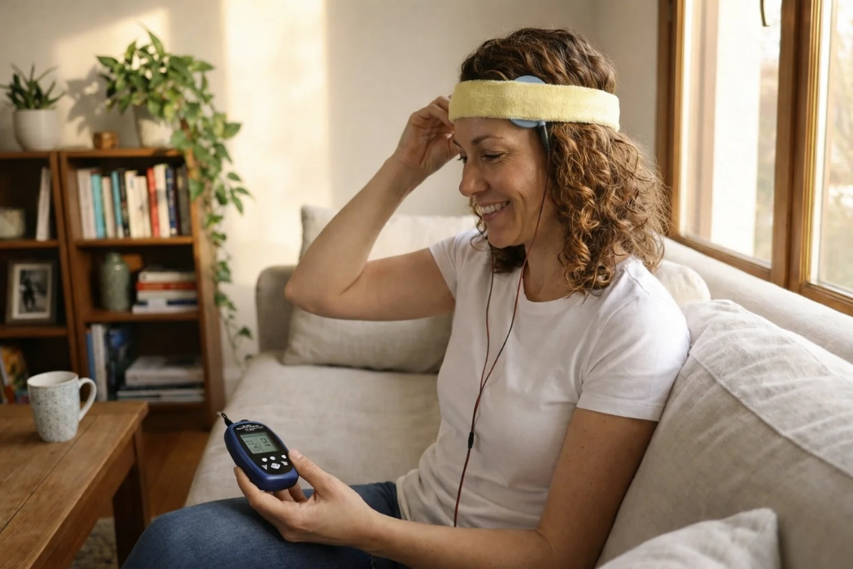
A tDCS headset or headband that shifts mid-session affects contact quality and can make current distribution uneven. Adjusting the fit before starting, not halfway through, keeps things steadier.
Hair thickness and head shape vary, so what fits one person snugly might feel loose on someone else. An extra minute spent on fit is time well spent.
Skip Sessions When Your Skin or Energy Is Off
Skin that’s broken, sunburned, or freshly irritated under the electrode area isn’t a good candidate for a session that day. Waiting until it recovers avoids unnecessary stinging.
Dehydration and fatigue can also change how skin feels during a session. Drinking water beforehand, and skipping a session on an unusually exhausting day, tends to make the experience more comfortable.
Track Your Sessions
Jotting down session length, settings, placement, and how your skin felt afterward builds a useful record over a few weeks. Patterns emerge that are hard to notice otherwise, like certain settings causing more irritation than others.
This takes barely a minute per session but pays off when troubleshooting. A rough session might turn out to have a simple cause, such as dry skin or under-moistened sponges, rather than a problem with the equipment.
Frequently Asked Questions
Is tingling during a tDCS session normal?
A light tingling or itch is commonly reported, especially in the first few minutes. Burning, sharp pain, or a sensation that keeps getting stronger is not normal and is a signal to stop.
Can I use tDCS if I have a pacemaker?
tDCS is generally not recommended for anyone with an implanted medical device such as a pacemaker or nerve stimulator. Speak with a doctor before considering it.
Can I run sessions back to back?
Follow the session length and frequency guidance in your device manual rather than stacking sessions. Longer use tends to increase skin irritation.
Conclusion
Safe home use isn’t complicated once the basics become second nature, but it does require paying attention instead of running sessions on autopilot. Small checks like proper fit, reasonable timing, and honest tracking add up to a routine that stays comfortable.
For more guidance on setup, fit, and session planning, thebraindriver.com offers practical resources for home users.