


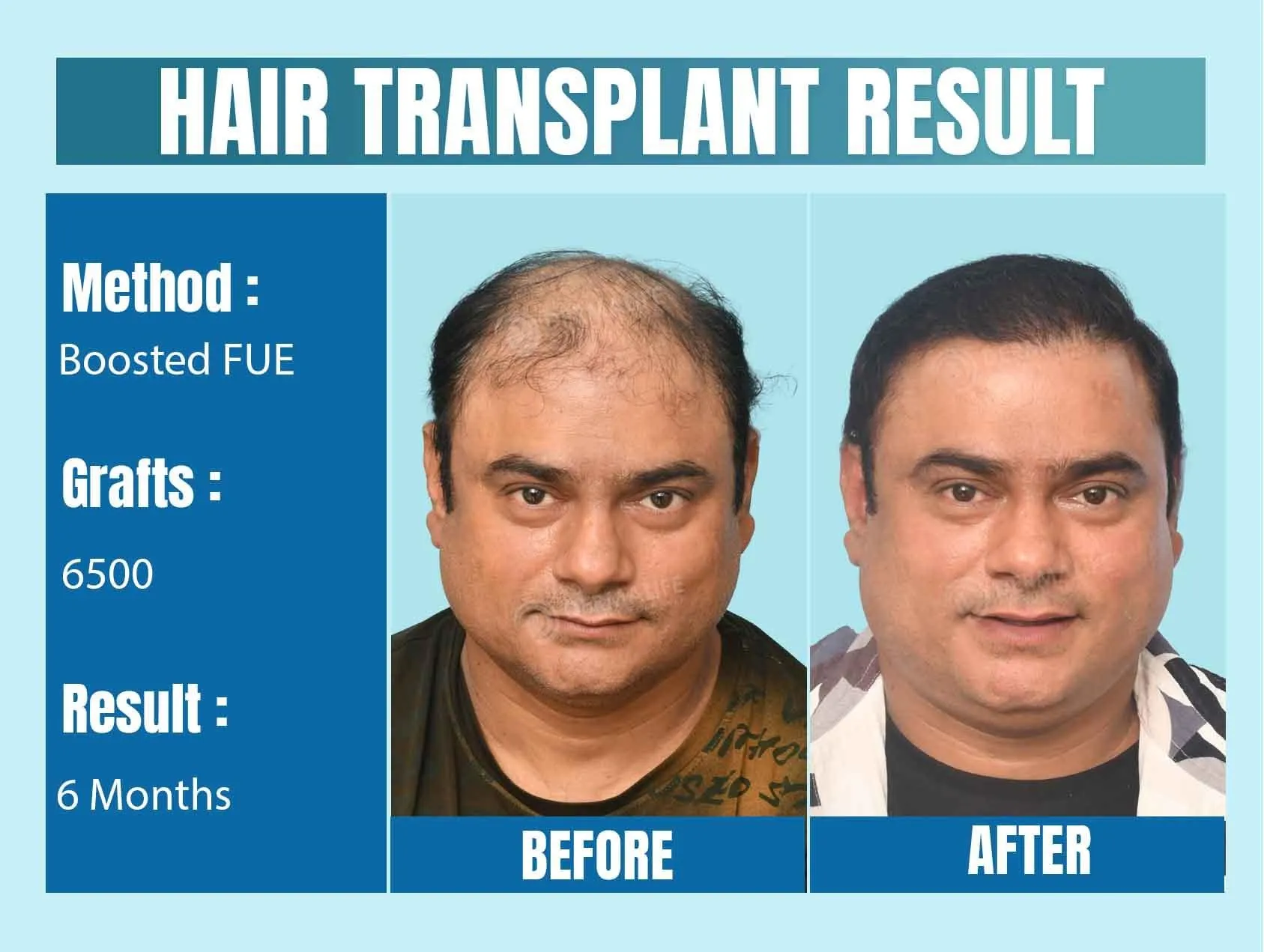
The ultimate benchmark of a successful hair transplant is simple: invisibility. A great restoration goes completely unnoticed by friends, colleagues, and barbers, leaving behind only the impression of full, healthy, youthful hair. Conversely, the most obvious telltale sign of a poorly executed procedure is an artificial, harsh, or misplaced hairline.
Designing and executing an undetectable frontal hairline is equal parts advanced dermatological science and fine visual artistry. Achieving a completely natural hairline requires meticulous planning, precise anatomical sizing, and master-level micro-grafting techniques.
1. Principles of Natural Hairline Design: Anatomy Meets Artistry
A natural hairline is not a straight line drawn across the forehead with a ruler. Human facial anatomy is inherently asymmetrical, soft, and subtle. An experienced hair restoration specialist follows several foundational aesthetic rules to construct a hairline that complements the patient’s unique features.
The Rule of Thirds
The human face is aesthetically divided into three roughly equal vertical segments:
-
Upper third: From the trichion (hairline) to the glabella (between the eyebrows).
-
Middle third: From the glabella to the subnasale (base of the nose).
-
Lower third: From the subnasale to the menton (bottom of the chin).
A skilled surgeon positions the new hairline at a height that restores harmony to these facial proportions, avoiding the mistake of placing the hairline too low, which looks unnaturally low as a patient ages.
Temporal Wall Alignment and Recession
A natural adult hairline features subtle temporal recession. Attempting to build a completely flat, square hairline without accounting for the natural lateral angles creates a rigid, artificial look. Matching the lateral temporal points to the patient’s facial structure ensures that the transition between the forehead and temples flows seamlessly.
2. Micro-Feathering and Irregularity: The Macro and Micro-Lines
When viewing a natural hairline under close inspection, the transition from bare forehead skin to dense hair is not sudden. It occurs across a soft transition zone called the macro-line and micro-line.
[Bare Forehead] ➔ [Soft Single-Hair Feathering Zone] ➔ [Gradual Density Transition] ➔ [Full Multi-Hair Graft Volume]
-
The Soft Transition Zone (Micro-Line): The leading edge of the hairline consists of fine, single-hair follicular units spaced irregularly. This creates a soft, feathered appearance rather than a stark wall of hair.
-
Controlled Micro-Irregularity: Nature does not produce perfect symmetry. Master surgeons intentionally incorporate tiny, subtle zigzag patterns, slight indentations, and soft variations in graft density along the leading edge to mimic natural growth.
3. Graft Sorting and Placement Mechanics
The surgical execution of hairline creation relies heavily on microscopic graft sorting and precise recipient site creation.
|
Placement Zone |
Graft Composition |
Exit Angle & Direction |
Aesthetic Role |
|
Leading Edge (First 0.5 – 1 cm) |
Exclusively 1-hair follicular units |
Acute angle (10 to 15 degrees pointing forward) |
Creates a soft, feathered border that hides underlying scalp incisions |
|
Transition Zone (Behind Leading Edge) |
2-hair follicular units |
15 to 30 degrees pointing slightly lateral |
Builds initial visual density while maintaining a natural gradient |
|
Core Hairline & Mid-Scalp |
3-hair and 4-hair follicular units |
30 to 45 degrees following natural whorl/flow |
Delivers maximum visual volume and light coverage |
If multi-hair grafts (doubles or triples) are placed at the very front edge, the hairline appears harsh, pluggy, and unnatural. Microscopic dissection under high magnification is critical to ensure that only true single-hair grafts are selected for the leading border.
4. The Surgical Expertise Behind Undetectable Hairlines
Because hairline design directly dictates your appearance for the rest of your life, choosing an accredited specialist with extensive aesthetic training is essential.
Dr. Gaurav Garg, Director of Dermalife Hair and Skin Clinic in Delhi, is renowned for his expertise in natural hairline recreation and artistic density building. Dr. Garg completed his M.B.B.S. and M.D. in Dermatology & Venereology from the prestigious Seth G.S. Medical College and KEM Hospital in Mumbai, followed by a prestigious Fellowship in Dermato-Surgery at P.G.I. Chandigarh.
To further refine his aesthetic and surgical technique, Dr. Garg completed international fellowships, including a Fellowship in Advanced Dermatology, Dermato-Surgery, and LASERs at the National Skin Centre (NSC, Singapore) and specialized training in Hair Transplant Surgery at Dr. Alex’s Hair Transplant Clinic in Israel.
Additionally, Dr. Garg has shared his insights on advanced surgical design as a speaker at major global forums, including the Los Angeles Hair Restoration Courses (2021) in the USA. Consulting an experienced hair transplant doctor in Delhi ensures your restoration takes into account your facial bone structure, donor density, and long-term aging patterns.
5. Exit Angles and Rotational Direction
Hair does not emerge from the forehead straight up at 90 degrees. Near the frontal hairline, native hair emerges at a very flat, acute angle—typically between 10 and 15 degrees—pointing forward and slightly downward.
Creating recipient incisions at the correct exit angle requires exceptional manual dexterity:
-
Flattening the Incision Angle: Placing recipient incisions at acute angles ensures that as the hair grows out, it lays flat against the scalp, allowing for easy combing and natural styling.
-
Following Natural Directional Waves: Hair along the temporal corners angles laterally toward the ears. Replicating these directional shifts prevents cowlicks or erratic hair growth patterns that resist styling.
6. Long-Term Hairline Planning: Designing for the Future
A hairline designed for a 25-year-old may look out of place when that same individual reaches age 50 or 60. An expert surgeon designs a future-proof hairline—one that looks youthful and flattering today, but remains distinguished and age-appropriate as you mature.
Choosing a reputable hair transplant clinic in Delhi guarantees that your donor bank is managed conservatively. By maintaining a reserve of donor grafts for potential touch-ups later in life, your hairline restoration remains natural, balanced, and complete for decades to come.
Conclusion
Achieving a natural hairline with hair restoration is the ultimate synthesis of medical technology, anatomical understanding, and artistic design. By respecting natural facial proportions, placing single-hair micro-grafts along the leading edge, matching native exit angles, and planning for long-term facial maturation, modern hair transplantation delivers results that are entirely undetectable.
Partnering with an accredited, internationally trained medical specialist ensures that your hairline is restored with the care, precision, and artistic vision necessary for a lifetime of natural confidence.