


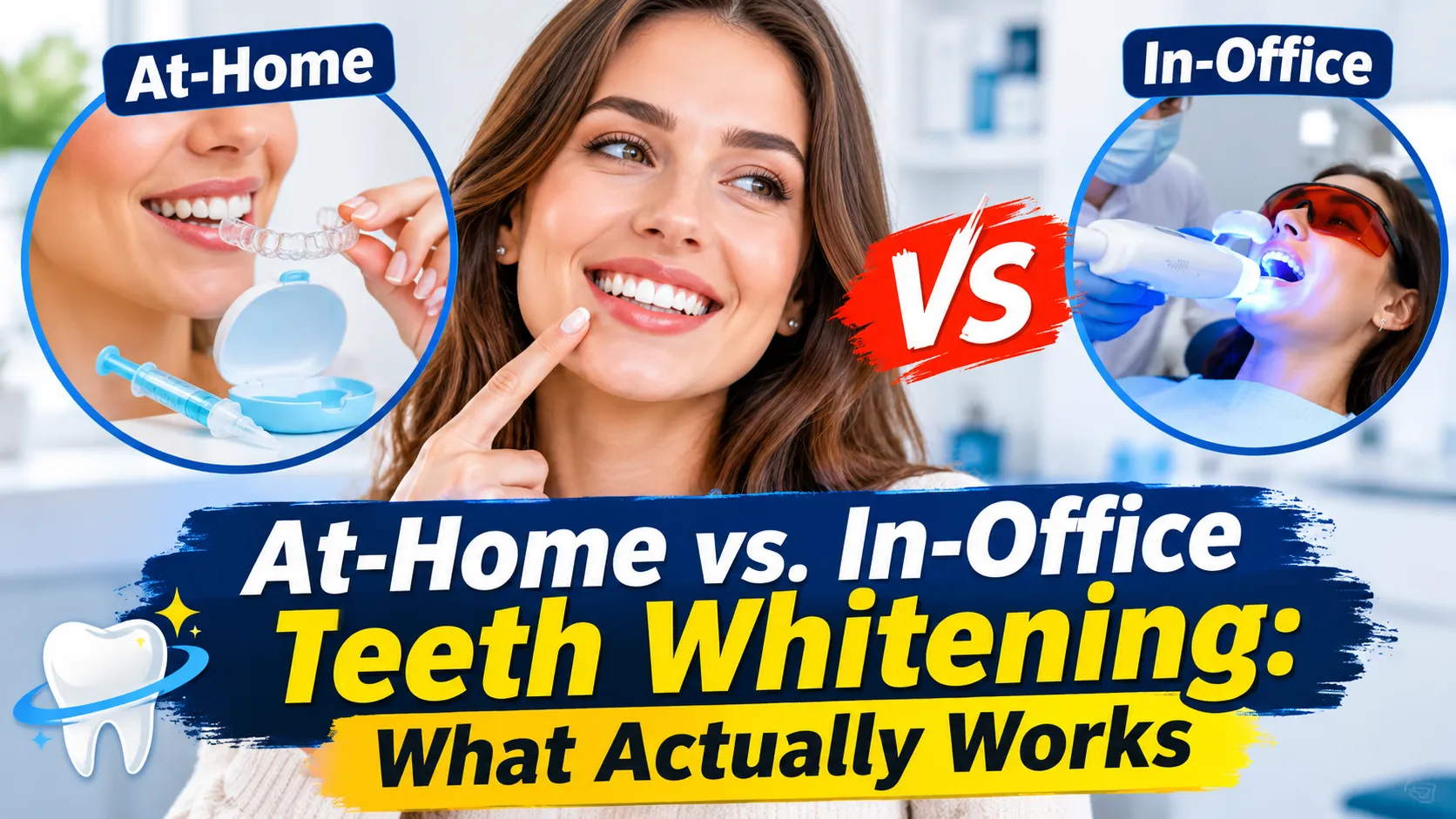
A brighter smile is one of the most common requests dentists hear. Patients want to know if drugstore kits work as well as professional treatments.
Many families searching for the best dentist in Suffern start with this exact question. Whitening is usually the first cosmetic treatment people try. The right answer depends on your goals and your timeline. It also depends on how much supervision you want along the way.
Teeth naturally darken over time. Coffee, tea, red wine, and tobacco are common causes of surface staining. Aging and certain medications can also affect the color of your enamel. Understanding the cause of your discoloration can help you and your dentist pick the right whitening approach.
What At-Home Whitening Kits Actually Do
Over-the-counter kits use a lower concentration of peroxide gel than professional treatments. They come in a few different forms:
-
Whitening strips
-
Whitening trays
-
Whitening pens
-
Whitening toothpaste
Most kits need daily use for one to two weeks before you notice a change. Results tend to be gradual rather than dramatic.
Coverage can be uneven. Standard trays do not match the exact shape of your teeth. A strip that shifts slightly can miss the edges of your smile. Whitening toothpaste mostly removes surface stains. It does not change the natural shade of your teeth.
These kits are convenient and budget-friendly. However, they offer less control than a professional treatment. Strong whitening gel without supervision can irritate sensitive teeth or gums. A dentist can tell you whether an at-home kit is a safe starting point for your smile.
What In-Office Zoom Whitening Actually Does
Zoom teeth whitening uses a stronger gel applied under professional supervision. Your dentist protects your gums and soft tissue before treatment begins. A special light activates the gel to speed up the process. Most patients see visible results in a single visit.
Your dentist monitors the entire process and can safely use a higher gel concentration than what stores sell. This often leads to faster, more even results across your smile. Your dentist also checks for cavities or restorations first, since whitening will not change the color of fillings or crowns.
What Happens During a Zoom Whitening Visit
-
Your dentist examines your teeth and gums to confirm you are a good candidate.
-
Your dentist places a barrier to protect your gums and lips.
-
Your dentist applies the whitening gel and activates it with a specialized light.
-
Your dentist reapplies the gel in cycles, usually over about an hour.
-
Your dentist reviews your results and gives you aftercare guidance.
Comparing the Two Options
People often ask the best dentist in Suffern which option is really worth it. Here is a direct comparison:
-
Speed: In-office whitening shows results in one visit. At-home kits take one to two weeks.
-
Strength: Professional gel is stronger and applied under supervision. Over-the-counter gel is milder by design.
-
Evenness: Custom trays and professional application cover teeth more evenly than one-size-fits-all strips.
-
Cost: At-home kits cost less upfront. In-office treatment costs more but needs fewer touch-ups.
-
Sensitivity risk: Unsupervised, high-frequency use of store kits is a common cause of temporary tooth sensitivity.
-
Supervision: A dentist can catch gum issues or restorations that will not whiten before you start.
Weigh cost against speed, and strength against sensitivity. That comparison usually points toward the better fit for your situation.
Common Mistakes People Make With Teeth Whitening
A few avoidable mistakes come up often with teeth whitening:
-
Skipping a checkup first: Cavities or gum disease can make whitening gel more irritating than it should be.
-
Whitening over restorations: Fillings, crowns, and veneers do not change color. They can end up looking mismatched next to newly whitened enamel.
-
Overusing at-home kits: Using strips more often than instructed will not speed up results. It mainly raises the risk of sensitivity.
-
Ignoring wear-time instructions: Leaving gel in trays longer than instructed does not whiten faster. It mainly irritates your gums.
A short conversation with your dentist can help you avoid these issues before you start.
Is Teeth Whitening Right for Everyone?
Whitening is not automatically the right choice for every patient. A few groups should check with a dentist first:
-
Patients with untreated cavities, active gum disease, or significant enamel wear
-
Pregnant or nursing patients, since dentists generally recommend waiting on elective cosmetic treatments
-
Patients with thin or worn enamel, which can make whitening feel more uncomfortable
-
Children and younger teens, since their teeth are still developing
-
Patients with several crowns, veneers, or bonding on their front teeth, which may create an uneven appearance
A short evaluation is the easiest way to find out where you stand before you spend money on whitening.
Who Tends to Benefit From Each Approach
Your situation usually points toward one option over the other.
At-home kits tend to work well if you:
-
Want a gradual, low-cost change
-
Have no gum sensitivity or dental work on your front teeth
-
Are comfortable following instructions consistently for a couple of weeks
In-office whitening tends to work well if you:
-
Are preparing for an event and want visible results quickly
-
Have tried store kits without success
-
Have sensitive teeth and want a supervised process
An evaluation with the best dentist in Suffern can help you avoid wasting money on the wrong option.
Keeping Your Smile Bright After Whitening
Whitening results are not permanent, no matter which method you choose. Coffee, tea, dark sauces, and tobacco gradually reintroduce staining over time. Rinsing your mouth with water after these foods and drinks can reduce how much new staining builds up.
Routine dental checkups and cleanings also help keep your results looking fresh. Most dentists typically recommend scheduling these every six months. Your hygienist can remove surface stains during a cleaning before they become noticeable. Keeping these visits on schedule is one of the simplest ways to protect your investment in a brighter smile.
A sensitivity toothpaste can also help if your teeth feel tender after whitening. Avoid extremely hot or cold foods for the first day or two to reduce discomfort. Your dentist can suggest a maintenance routine suited to your smile.
Questions to Ask Before You Choose a Whitening Option
A short conversation with your dentist can save you time, money, and frustration. Bring these questions to your next visit:
-
Do I have any cavities, gum disease, or restorations that need attention first?
-
Which whitening method fits my timeline and budget?
-
How sensitive are my teeth likely to be during and after treatment?
-
What results can I realistically expect for my specific stains?
-
Are there lifestyle habits I should change to protect my results?
-
How should I maintain my results once treatment finishes?
These questions help you leave your appointment with a clear plan instead of guesswork.
Making a Choice You Will Be Happy With
Both whitening options are safe and effective when you use them correctly. The right choice comes down to a few factors. These include how fast you want results, your budget, and whether you have dental work that needs checking first. A short consultation can save you time and money either way.
At Promise Family Dental, we evaluate your teeth and gums before recommending any whitening option. Our team has worked with patients across Suffern, Airmont, Monsey, and Spring Valley who wanted a brighter smile without guesswork. Many of them were looking for the best dentist in Suffern to guide a simple decision. We are ready to help with yours.
Book a smile consultation and find out which whitening option fits your teeth, your timeline, and your budget.
Frequently Asked Questions
Is in-office teeth whitening safe?
Yes, when a trained dental professional performs it. Your dentist checks your gums and teeth first, then uses a controlled application method. This supervision allows your dentist to use a stronger whitening gel safely. Most patients experience only mild, temporary sensitivity afterward.
How long do teeth whitening results last?
Results generally last several months to a couple of years, depending on your diet and habits. Coffee, tea, red wine, and tobacco can cause new staining over time. Touch-up treatments or at-home maintenance kits can help extend your results. Your dentist can recommend a maintenance schedule at your next visit.
Can I switch between at-home and in-office whitening?
Yes, many patients use both. Some start with an in-office treatment for fast results, then use at-home trays for maintenance. Others begin with store kits and move to professional treatment if results are too slow. Your dentist can recommend a combination based on your goals and sensitivity level.